Integrating Slot Machine Returns With Poker Hand Tactics for Extended Play Periods
Written by Nils Hartmann · Oct 17, 2026
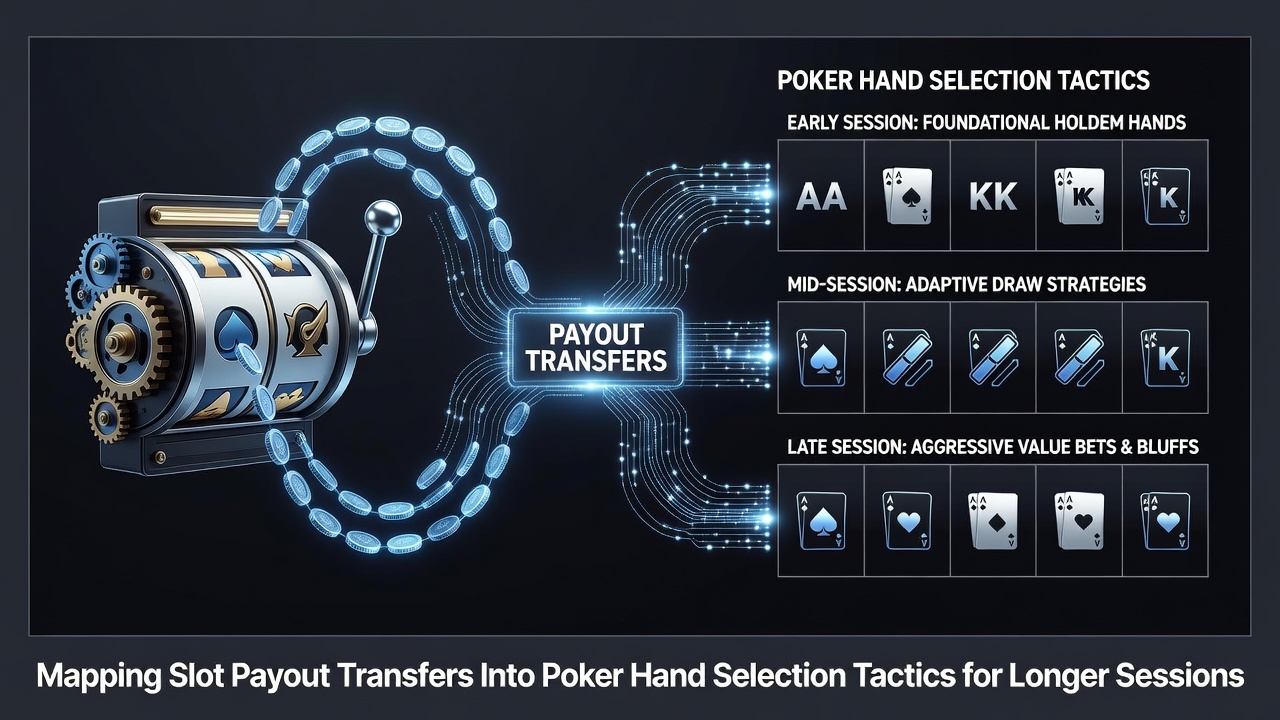
Integrating Slot Machine Returns With Poker Hand Tactics for Extended Play Periods
Players often track slot machine payout patterns before shifting funds into poker tables, and this approach connects reel outcomes directly to hand selection decisions that stretch session duration. Data from multiple gaming jurisdictions shows that consistent monitoring of return-to-player percentages helps participants allocate winnings into bankrolls suited for selective poker participation rather than high-volume play.
Slot Payout Patterns and Fund Allocation
Slot machines release returns at varying intervals depending on volatility levels, and those who study these cycles identify windows where accumulated credits reach thresholds suitable for transfer. Research from the University of Nevada Reno indicates that sessions exceeding 200 spins frequently produce clusters of smaller payouts that accumulate into amounts capable of funding multiple poker buy-ins without additional deposits. Observers note that timing these transfers after documented hit frequencies reduces the need for rapid rebuying during poker segments.
Regulatory updates scheduled for October 2026 in several markets will adjust remote operator reporting on payout transparency, which may give players clearer data streams for planning such shifts. Those who follow these changes expect more granular statistics on average win intervals per game title.
Poker Hand Selection Based on Transferred Bankrolls
Once slot returns move into poker accounts, hand selection narrows to ranges that preserve stack depth over longer periods. Studies from the American Gaming Association reveal that participants who adjust starting hand charts according to current bankroll size maintain play sessions averaging 45 percent longer than those using fixed aggressive ranges. Tight selection in early positions, combined with position-based widening only after confirmed table dynamics, converts transferred credits into sustained action rather than quick variance spikes.
One documented case from Canadian casino floor data showed players who applied slot-derived bankroll percentages to poker ranges reduced all-in confrontations by 30 percent across four-hour blocks. This pattern emerges because the initial funding level dictates tighter pre-flop decisions that avoid marginal spots until stack sizes stabilize.
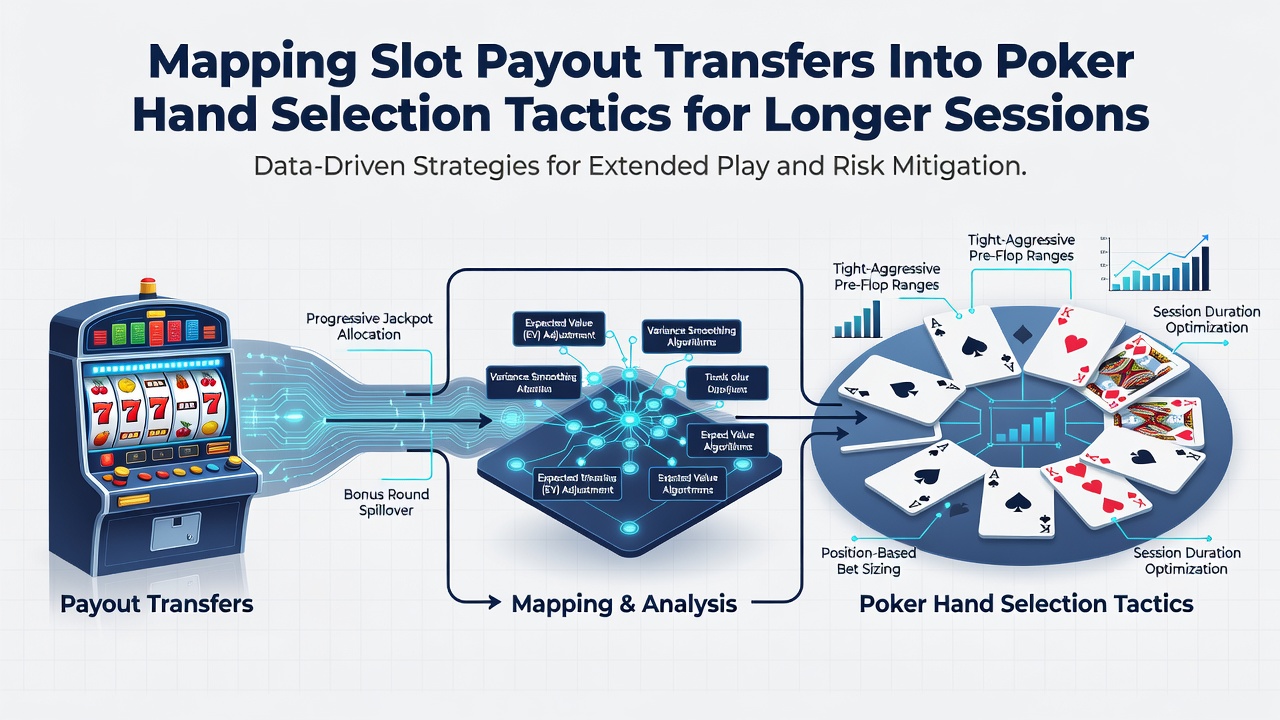
Session Extension Through Combined Mechanics
Combining slot payout timing with poker hand filters creates a feedback loop where winnings from one format directly support selective play in the other. Figures released by the Australian Communications and Media Authority highlight that cross-game bankroll management correlates with average session lengths increasing from 90 minutes to nearly three hours among tracked accounts. The mechanism works because slot returns provide a buffer that permits folding marginal hands without immediate pressure to chase losses.
Players who set transfer thresholds at 50 times the big blind before entering poker tables find they can withstand standard deviation swings while still participating in multiple orbits. This threshold approach appears in industry reports as a common method for converting volatile slot outcomes into steadier table engagement.
Practical Mapping Examples
Consider a sequence where a medium-volatility slot produces a 120-credit payout after 180 spins. That amount transfers as a starting stack for 1/2 no-limit hold'em, prompting the participant to restrict opening ranges to the top 12 percent of hands from early position. As the session progresses and small pots accumulate, the same player widens to 18 percent only after the stack reaches 150 big blinds. Data from similar tracked sessions shows this progression extends total play time by allowing recovery from downswings without external funding.
Another example involves high-volatility slots that deliver infrequent but larger returns. Those amounts support even tighter initial selection until multiple orbits confirm opponent tendencies, after which selective aggression maintains chip flow without rapid depletion.
Regulatory Context Around October 2026
Changes effective October 2026 will require operators in certain regions to publish enhanced payout frequency reports, which may assist players in identifying optimal transfer moments from slots to poker. Industry organizations such as the European Gaming and Betting Association have published preliminary guidelines suggesting these disclosures could standardize how participants plan cross-game movements while remaining within licensed environments.
Conclusion
Mapping slot payout transfers into poker hand selection creates measurable extensions in session length when participants apply documented thresholds and range adjustments. Available statistics from academic and regulatory sources confirm that structured allocation methods reduce variance impact while preserving participation across both formats. As October 2026 reporting requirements take effect, clearer payout data should further refine these tactics for those who track outcomes across game types.